How an interdisciplinary approach is enabling faster health breakthroughs
Three ways that different disciplines, from astronomy to machine learning, are advancing medicine.

From mapping tumors to discovering entirely new medications, advanced capabilities in medicine and health care don’t just rely on one area of expertise. At the recent World Changing Ideas Summit, hosted by Johns Hopkins University and Fast Company at the Hopkins Bloomberg Center, leaders from across the health care sector shared how a multidisciplinary approach is helping them advance the field.
Here are three ways innovations in medicine are building on astronomy, computer vision, and more to help address some of today’s most important health challenges.
How astronomy is helping fight cancer
In cancer immunotherapy, a treatment that helps the body’s own immune system find and attack cancer cells, the spatial features of tumor cells are key to understanding if and how the body is responding to treatment.
Using the same technology that astronomers use to map the stars, Johns Hopkins astrophysicist Alex Szalay and pathologist Janis Taube teamed up to create AstroPath, which applies this tech to immunofluorescence imaging of cancer biopsies to better understand tumors’ responses to immunotherapies. By revealing a patient’s reaction to a therapy, the platform can help provide more precise treatment faster.
The technology at the core of AstroPath is based on sky-mapping algorithms that allow scientists to study the spatial interactions of the tumor and activated T cells—important immune cells in the body—near the tumor boundaries.
“The idea was that there are strong parallels in terms of what we’re dealing with now in medicine and what astronomy figured out now 25 to 30 years ago, in terms of the need to organize spatial data, especially data that is multispectral,” Taube said. “The spatial arrangements are really important to define as we try to figure out how the immune system interfaces with cancer to allow us to tip the balance more in favor of the immune system.”
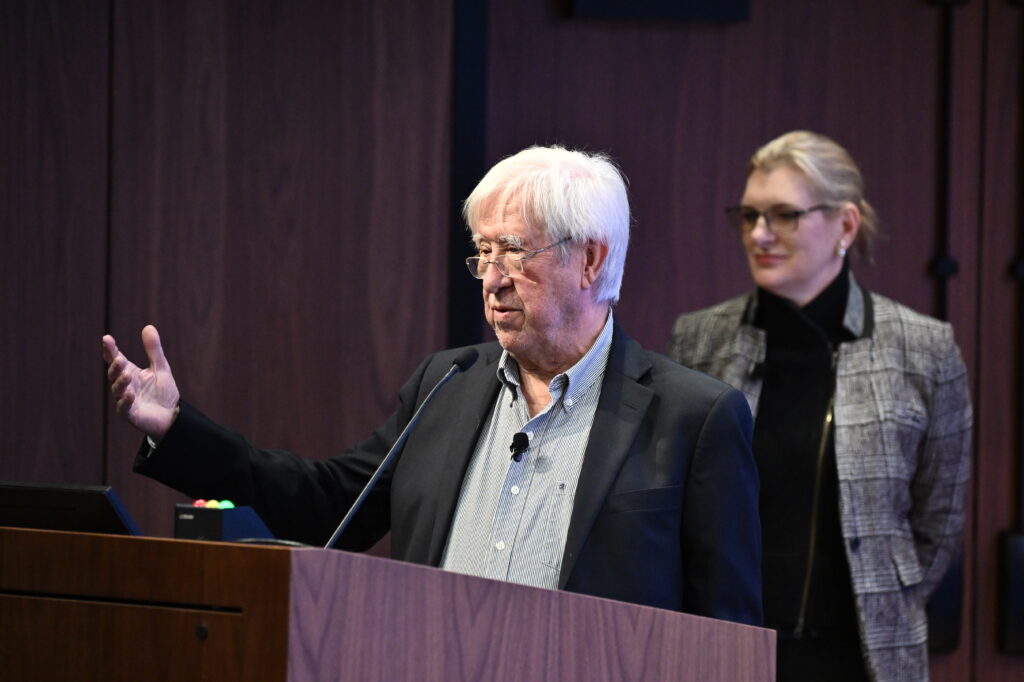
By making this data available, Szalay and Taube hope to create the “Google Maps of pathology” that other oncologists can use and add to, further refining the tool to help pair the right patient to the right therapy. AstroPath can also help predict long-term outcomes after immunotherapy.
“Just like having a lot of open data for COVID changed the way we actually created the vaccinations, we hope that this will lead to similar breakthroughs in cancer,” Szalay said.
How computer vision is helping prevent disease and improve surgery
At Visiliant, a social enterprise cofounded by Hopkins researchers, computer vision helps expand accessibility to eye disease diagnosis and treatment. It allows health care workers with minimal eye care experience to take clinical-grade smartphone images of the front of the eye, which AI then assesses to provide an initial diagnosis that can be validated by an in-person exam.
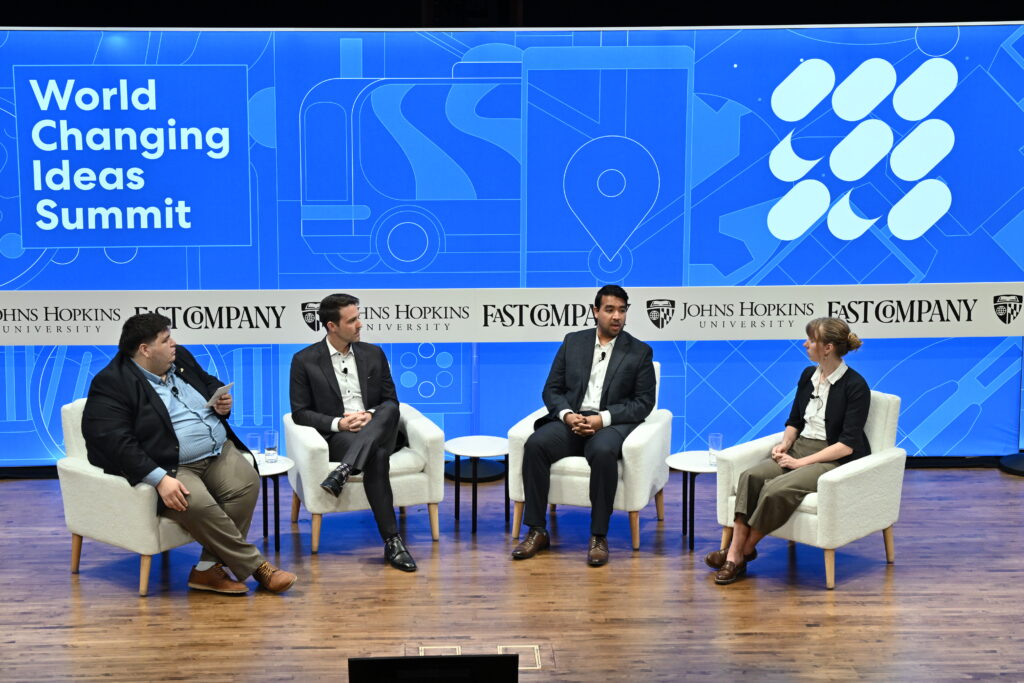
Surgical tech company Proprio also uses computer vision and AI, along with augmented reality, to give surgeons real-time information and 3D renderings in the operating room for more precise surgery. Proprio’s technology can also predict the clinical outcome of many different steps in an operation, “redefining what an outcome is,” said Gabriel Jones, cofounder and CEO of Proprio.
“So now the feedback loop [for major surgery] has been compressed from two years-plus to 10 times a second,” Jones said. “So the implications for how we treat, who we treat, the types of procedures, and pathologies we can address, let your mind go, because the pie is way bigger than whatever it looks like today.”
How AI can accelerate drug discovery
Developing an antibiotic often requires 10-15 years and over $1 billion, and the return on investment is usually much lower than other medications. Yet new antibiotics are key to addressing the “unseen pandemic” of antimicrobial resistance, according to Akhila Kosaraju, president and CEO of Phare Bio.
“For every year that we’re not developing new antibiotics, the bacteria are getting smarter and smarter, they’re evading our existing mechanisms, and we’re still going back to the same classes [of drugs] that we’ve been using for decades,” Kosaraju said.
There are more than 2.8 million antimicrobial-resistant infections in the U.S. each year, according to the Centers for Disease Control and Prevention, which has labeled it an urgent global public health threat.
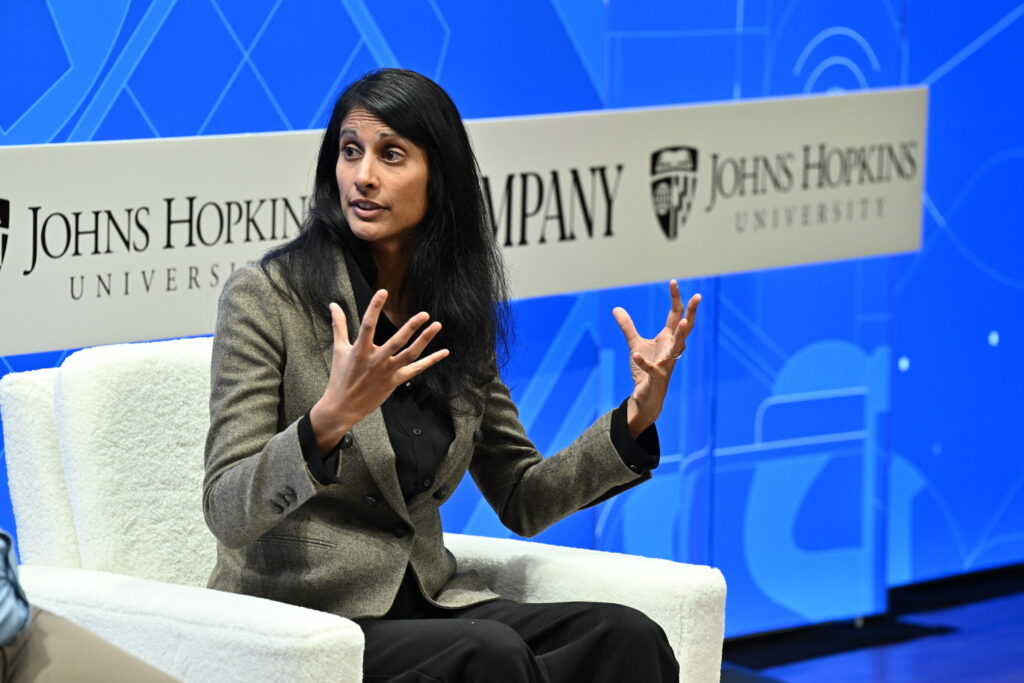
This requires a new sense of urgency, Kosaraju sai. To accelerate and scale the discovery and creation of new antibiotics, Phare Bio is turning to AI.
“The idea that we are in this race is such a well-suited problem for AI to really address,” Kosaraju said. Phare Bio is building on the work of Massachusetts Institute of Technology researchers who discovered a new antibiotic using AI in 2020 and is partnering with MIT’s Collins Lab to build its generative AI platform. While AI can help speed up these types of discoveries at scale, Phare Bio is also layering parameters into its generative AI model to predict side effects of certain drug compounds or whether they can be taken orally.
Right now, the company is targeting pathogens that are priorities for the CDC and World Health Organization, Kosaraju said.
Alphabet’s Isomorphic Labs is also looking to leverage predictive and generative AI models to develop new medications. As the company’s work advances to the clinic, Isomorphic’s Chief Medical Officer Ben Wolf hopes to “transform this industry-leading AI-based drug development platform into an industry-leading clinical pipeline” with an initial focus on medications for oncology and immunology.
Wolf said AI and machine learning can be used to optimize drug development by:
- Better predicting preclinical or clinical success.
- Streamlining study documentation.
- Generating and analyzing data.
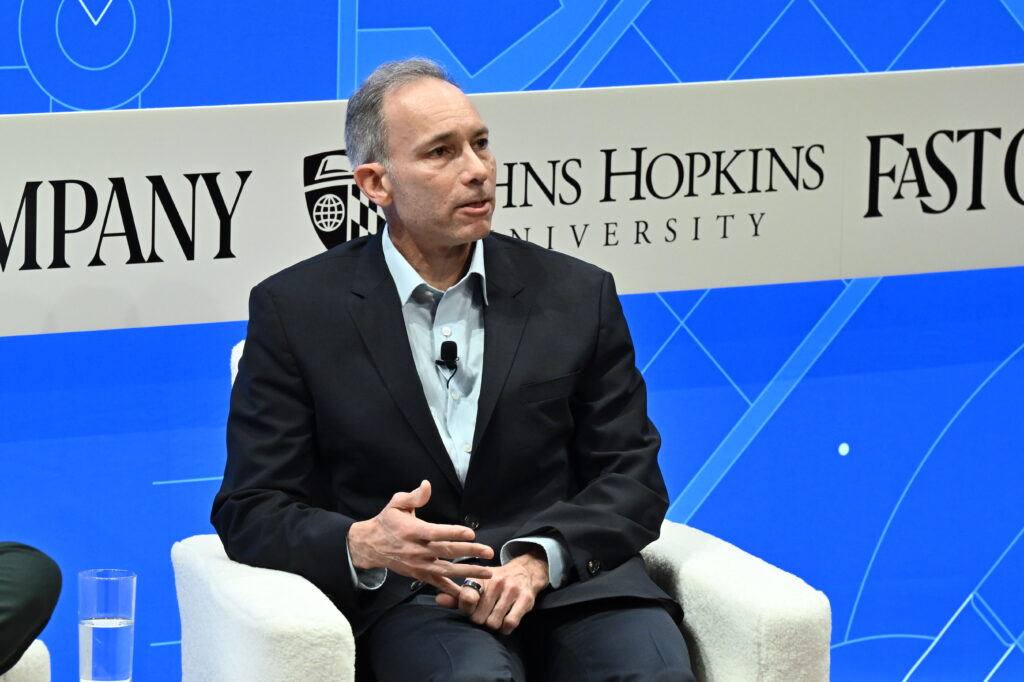
On average, it takes 10 years to get a new medication approved by the FDA. Regulatory reform must be coupled with faster drug development to get new approved medications to market in less than a decade, Wolf said.
“Merging AI-based approaches for drug development and health care delivery with precision medicine will ultimately allow us to solve all disease,” Wolf added, “because it’ll really give us the ability to fine-tune and optimize health management and individual drug development for a given patient, for their specific genetics and environmental factors.”