To help modernize federal agencies, government leaders look to attract young AI experts
Credit: G. Edward Johnson
President John F. Kennedy famously challenged Americans to “ask not what your country can do for you—ask what you can do for your country,” in his inaugural address in 1961.
Now, 65 years later, a group of new leaders is challenging Americans with tech backgrounds to consider public service in order to streamline processes and modernize out-of-date technology.
Experts from academia, government, and nonprofits gathered at the Johns Hopkins University Bloomberg Center for a live recording of the Washington AI Network podcast to discuss what it will take to attract new tech-savvy talent to government roles. At the center of the conversation was the recent launch of the U.S. Tech Force initiative, a cross-sector effort designed to recruit digital experts into mission-driven roles within the federal government to accelerate innovation for the public good. Here are five insights from the discussion.
It’s about improving government service
When it comes to integrating AI and tech talent into the federal government, whether in the Navy or at the IRS, one of the main goals is to lower the “cognitive load” for workers and reduce tedious manual tasks—like sifting through a lot of data and variables—in favor of high-level decision-making, said Justin Fanelli, the chief technology officer for the U.S. Department of Navy. When deploying new technology or considering new solutions, he said it’s important to remember “first principles.”
“Why do we go into the government? Because you want to serve the people, right? … We want to be more efficient. We are being more efficient. How much better can this be? Independent of the domain, it’s what is the baseline, and then how can we beat that baseline. … [For soldiers, sailors, and pilots] that looks like decreased time on mission, increased legality, increased survivability.
– Justin Fanelli, chief technology officer for the U.S. Department of Navy
Justin Fanelli, chief technology officer for the U.S. Department of Navy
The federal government is facing a retirement cliff
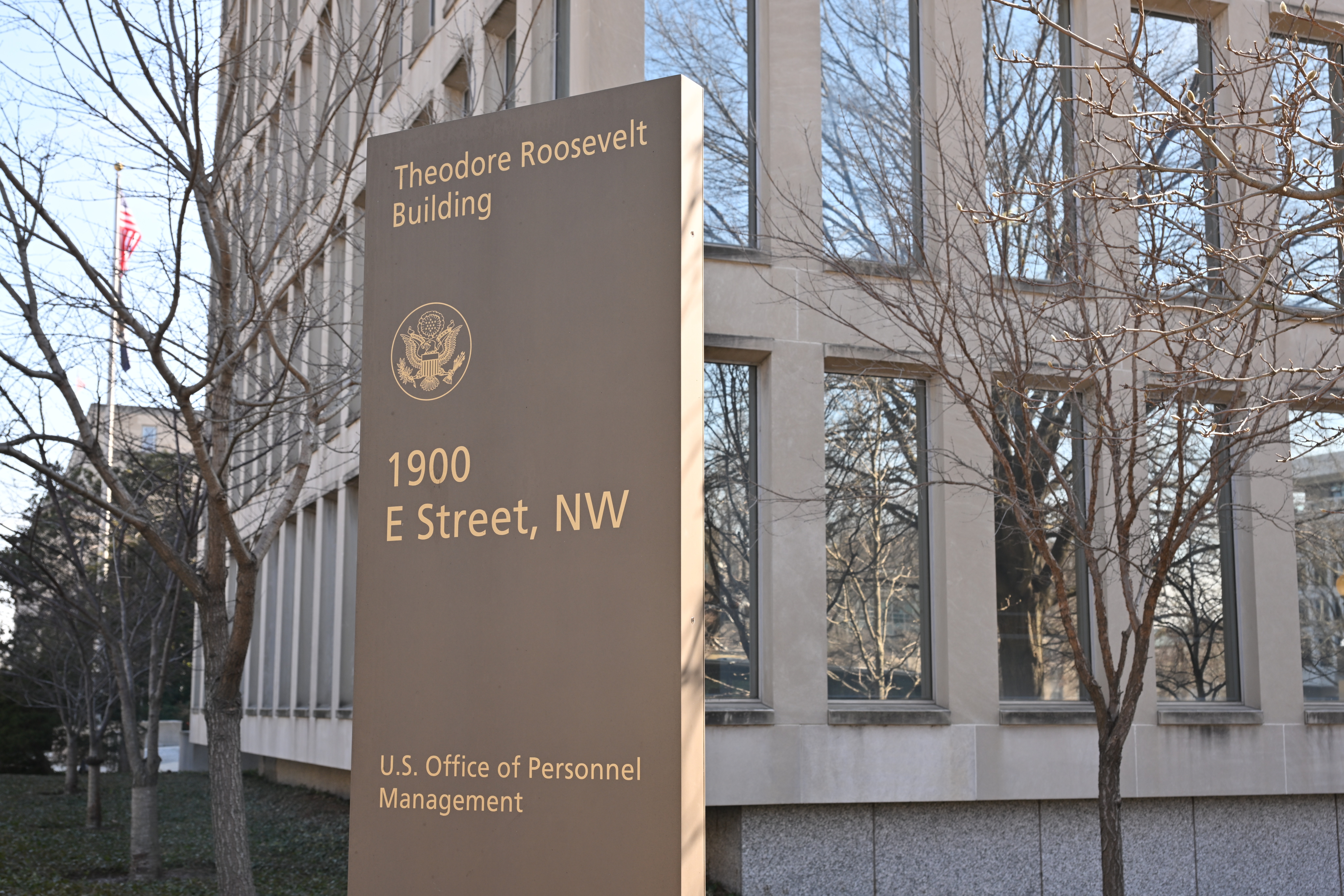
For Scott Kupor, director of the U.S. Office of Personnel Management, the push for a U.S. Tech Force isn’t just about modernization; it’s about survival. Fewer than 9% of federal employees are younger than 30, according to a 2025 Pew Research Center report. In 2023, about 43% of federal workers were over 50. This creates an urgent need to recruit “digital natives” before a mass retirement wave hits.
“If we do nothing, basically we have a pending problem where we’re going to have a ton of people retiring … and we’ve done absolutely nothing to actually replenish the pipeline.”
– Scott Kupor, director of the U.S. Office of Personnel Management
Scott Kupor, director of the U.S. Office of Personnel Management
“Skills over degrees” is the new hiring mantra
The government is moving toward skill-based hiring, which prioritizes actual technical ability over traditional proxies like four-year college degrees, Kupor added. This shift allows the government to recruit talent from non-traditional backgrounds, including trade schools and community colleges.
“If somebody is fantastic and they don’t have a college degree, but they can perform at the level we need them, then God bless them—we should take them.”
– Scott Kupor, director of the U.S. Office of Personnel Management
Public service or the private sector? You can do both.
To compete with Silicon Valley, the government must rebrand, said Arun Gupta, CEO of NobleReach Foundation, a nonprofit that focuses on putting high-achieving Americans in government roles. Instead of pitching a lifetime of civil service, his organization encourages techies to treat government service as a high-impact tour of duty that could enhance their private-sector resume.
“It used to be the government was selling careers for 30 years, and what we’ve been saying is … come for a year or two, learn and see what’s going on here. You may decide to stay [or to leave.] We celebrate both options, because even if they leave, we want them to be ambassadors for understanding what public service is about.”
– Arun Gupta, CEO of NobleReach Foundation
Arun Gupta, CEO of NobleReach Foundation
AI is the new moonshot
Experts likened the current race to integrate AI into just about everything we do to the 1960s Space Race—particularly with global AI competitors like China, Kupor added. The U.S. government is seeking to recruit Americans who want to work on the world’s largest datasets and most complex national security challenges.
“The U.S. Tech Force could be an absolutely foundational capability to build that workforce of the future. [We need to really] let AI become part of the ecosystem—not just an interesting technology, but something that is part and parcel to how we do business and how we fight as a nation.”
– Christopher Watkins, chief mission engineering and integration officer for the Johns Hopkins Applied Physics Laboratory (APL)