10 insights from the 2026 Science Diplomacy Summit
More than 500 scientists, diplomats, policymakers, and industry leaders from around the world gathered at the annual event to explore how science and diplomacy are converging to shape the future.
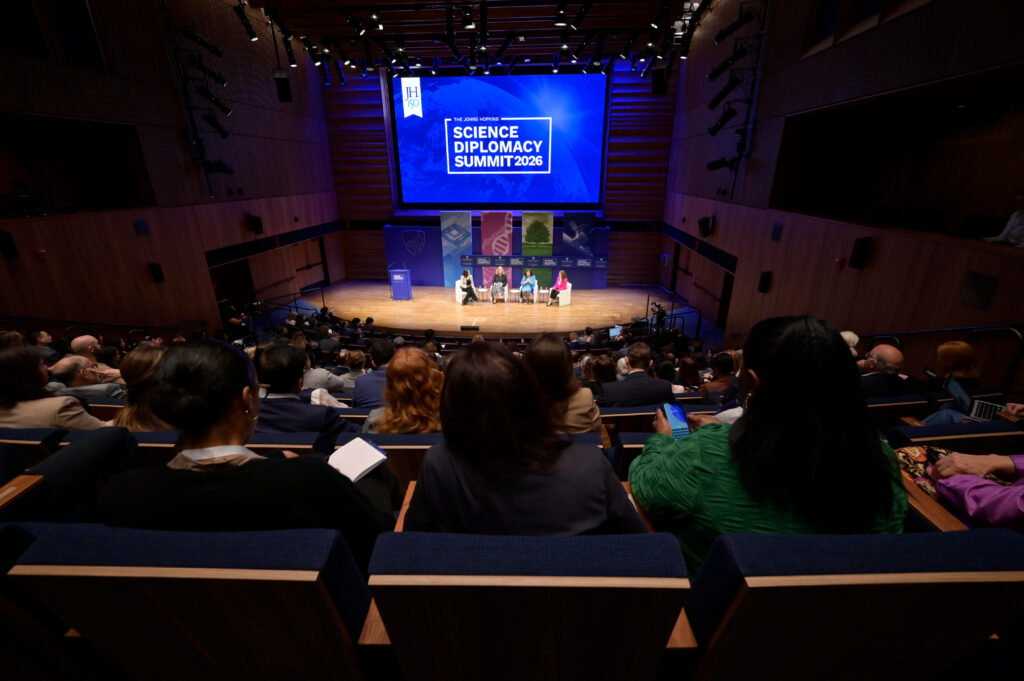
As the world’s biggest challenges grow more complex—from infectious disease prevention to artificial intelligence governance—progress depends on how effectively countries work together. The Artemis II mission’s recent journey around the moon offers a powerful example of science diplomacy, as it’s part of a broader international effort anchored by the Artemis Accords, which now includes more than 60 countries working toward a shared goal of space exploration.
That same spirit of collaboration was at the heart of the third annual Johns Hopkins Science Diplomacy Summit at the Hopkins Bloomberg Center, where global leaders gathered to tackle these topics head on. Across two days, one theme stood out: Solving global challenges will require trust, partnerships, and innovative ways of working together. Here are 10 insights from leaders at the summit.
On what enables breakthroughs
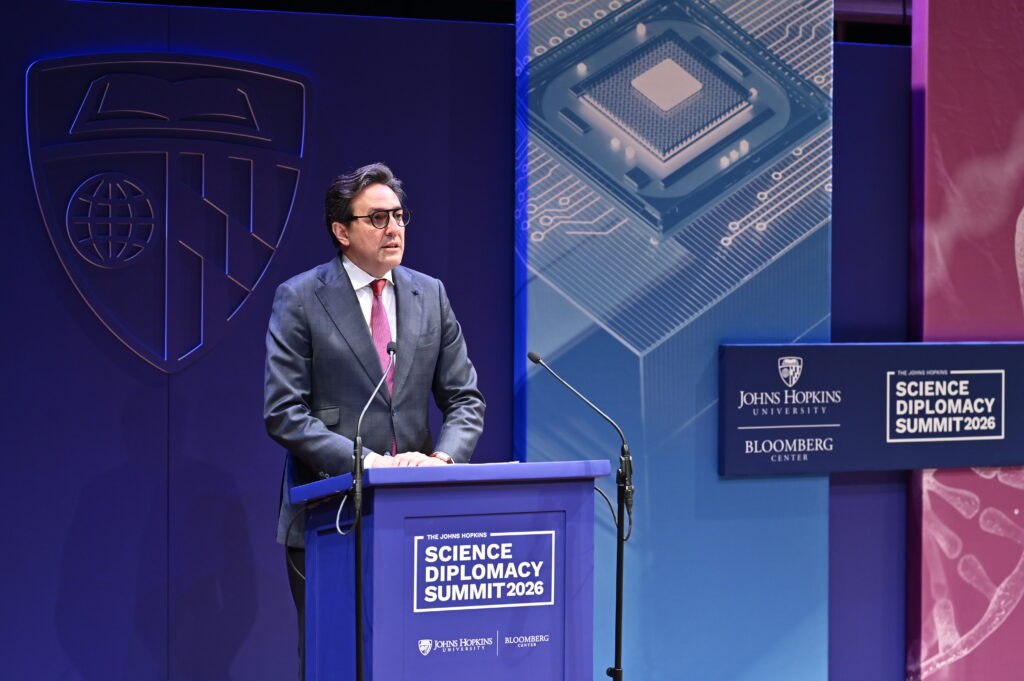
“The most transformational breakthroughs happen in ecosystems that do not emerge from isolated labs or siloed institutions. They happen when partnerships are intentional, when investments are long term, and when people work across sectors, disciplines, and national borders with a shared sense of purpose.”
– Darío Gil, under secretary for science for the U.S. Department of Energy
On science as a bridge in a fractured world
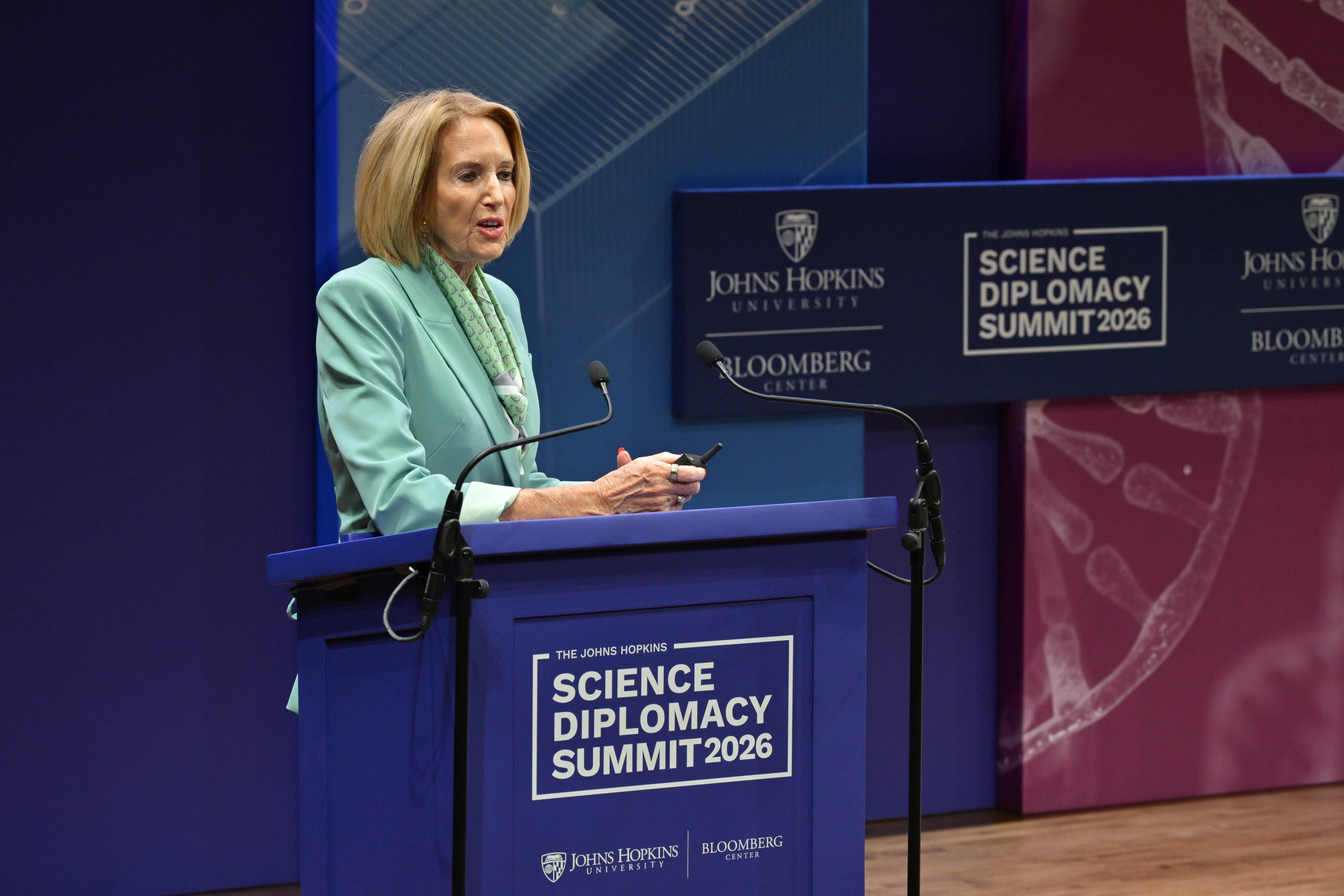
“At a time when political institutions are failing, the fact that scientists still consider themselves part of a global community—and still understand the importance of global cooperation—I think this is providing an opening for us as scientists to fill a vast chasm that has been left by the disintegration of national cooperation on many issues in diplomacy.”
– Marcia McNutt, president of the National Academy of Sciences
On the urgency of global collaboration
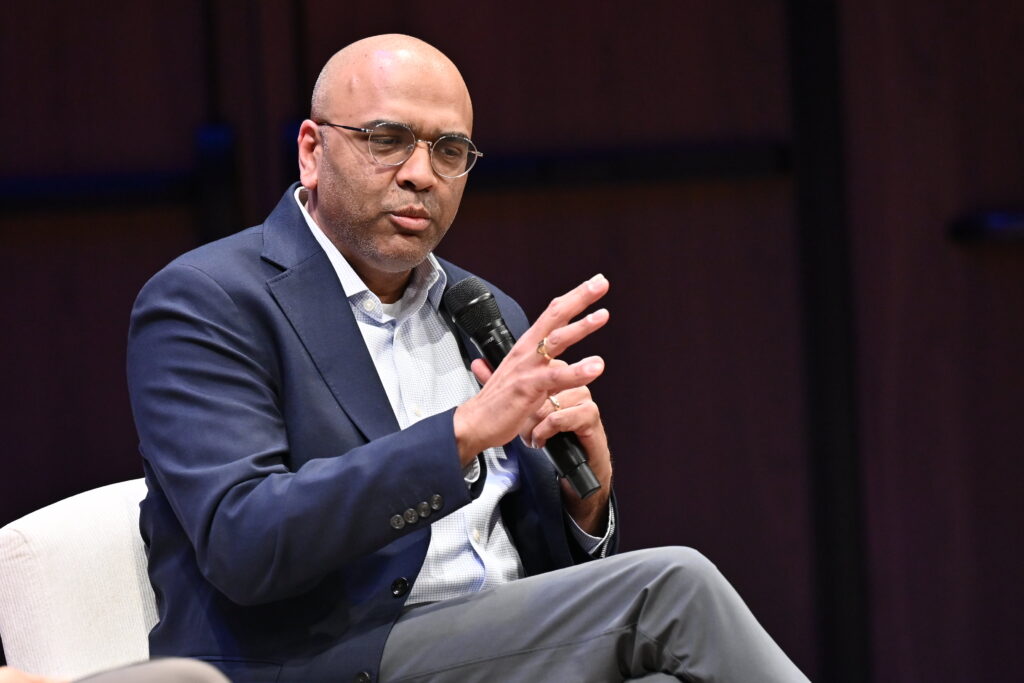
“The world is going to need the technologies that come from collaboration…I don’t even care where the cure for Alzheimer’s comes from—whether it’s from Beijing or Brussels or Boston—but I do want it to come, and I know it’s going to come faster if there’s collaboration amongst groups in those areas.”
– Sudip Parikh, CEO of the American Association for the Advancement of Science
On whether science diplomacy will survive this era of disruption
“When other diplomatic channels die, science will be there, because you can’t keep scientists from talking to other scientists. … We want to share our data. We want to share our findings. It is how science advances, and it is the one universal language.”
– Tammy Ma, director of the Livermore Institute for Fusion Technology at Lawrence Livermore National Laboratory
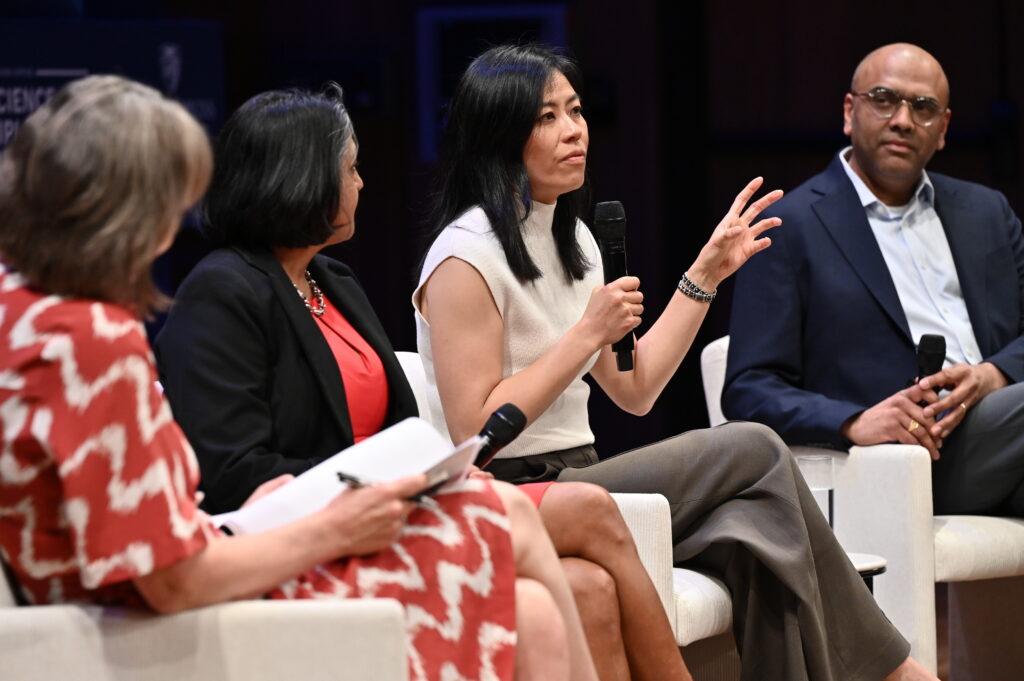
On how science diplomacy affects public health
“There are going to be new diseases. We need what happened during COVID, which was incredible collaboration with lots of challenges, but it was at breakneck speed. … So the more we can keep our collaborative networks going, the more we will be successful.”
– Amita Gupta, faculty co-chair of the Gupta-Klinsky India Institute and director of the Division of Infectious Diseases at the Johns Hopkins School of Medicine

On communicating the complexity of science in a productive way
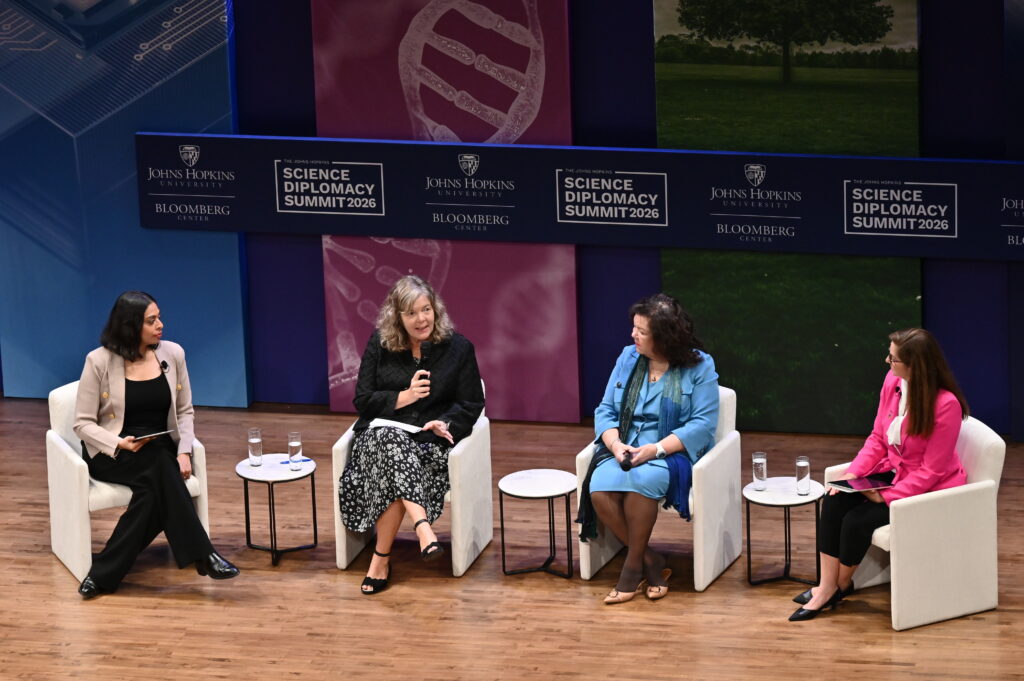
“All science advisers will say there’s communication of risk in a way that is honest and makes sense to people but doesn’t get snarled up in probability and math. So just finding really human ways to explain things, especially small chances of very large, bad things happening—it is very hard to communicate that.”
– Juliet Gerrard, professor at the University of Auckland and former chief scientist advisor of New Zealand
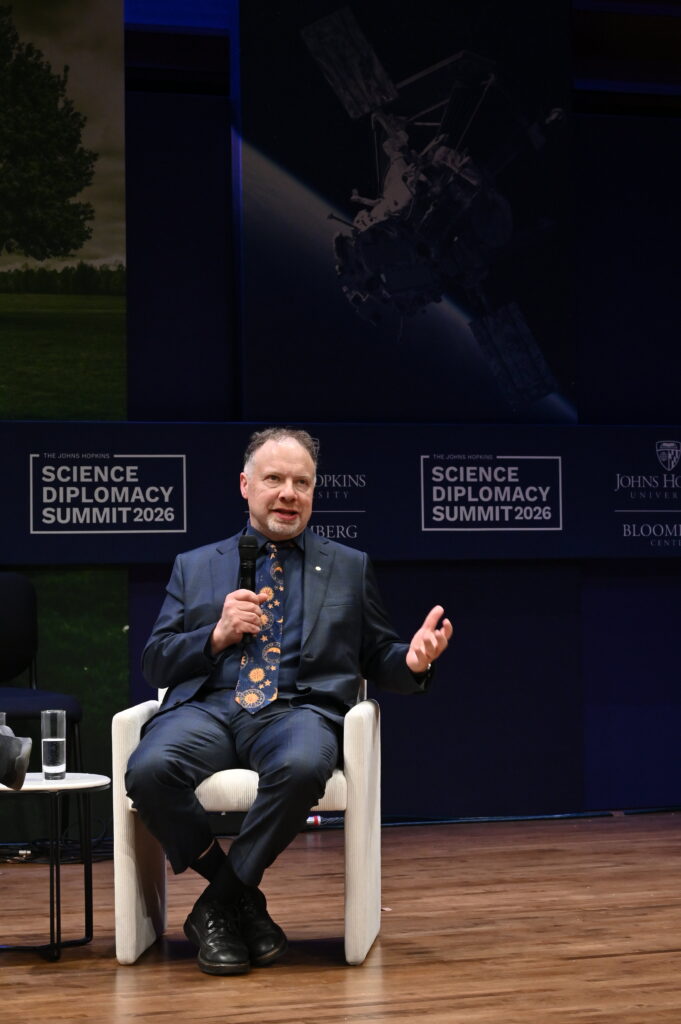
On the uncertainty at the heart of space science
“Science is this living, breathing thing. There are things that we know, there are things that we think we know, there are things we definitely don’t know. And right now, we are in a period where for 25 years, we’ve had what we call a standard model of the universe, called lambda CDM, which sort of encapsulates everything we think we know. There’s dark matter, there’s dark energy, there’s us—‘us’ is only like 4% of the universe—there are the laws. It’s all great, except we don’t understand at a very deep level the nature of about 96% of that stuff—the stuff that’s called dark matter and energy. So we do more and more precise experiments to try to tease out some wrinkles.”
– Adam Riess, Nobel laureate and Bloomberg Distinguished Professor of physics and astronomy at Johns Hopkins University
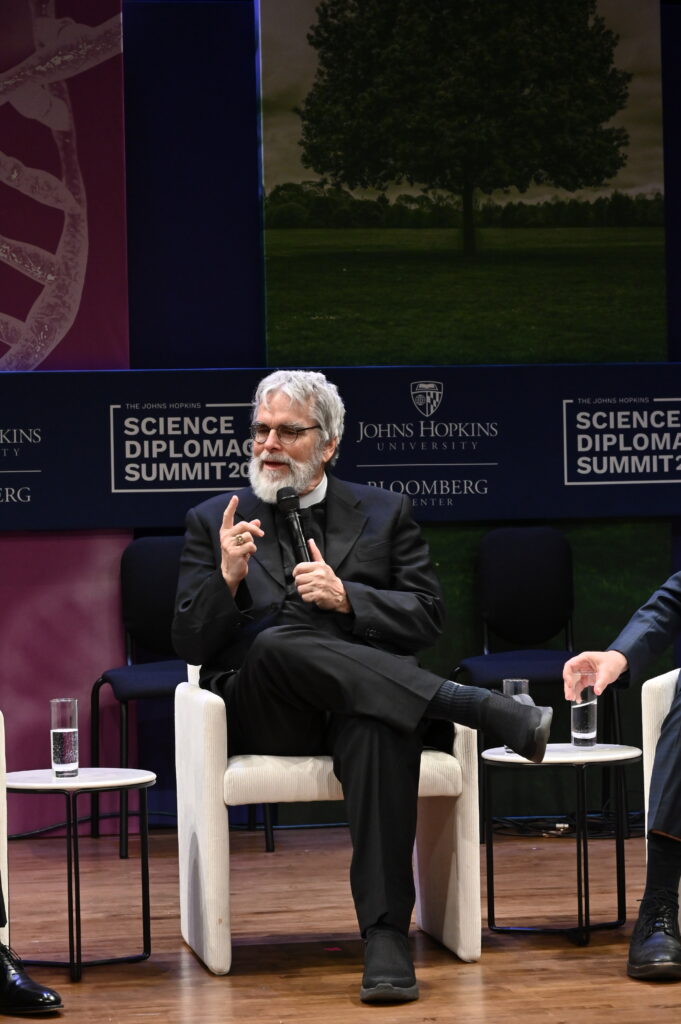
On curiosity as a defining human trait
“How many of you have ever seen the rings of Saturn in a little telescope? How many of you who have seen the rings of Saturn have ever seen the rings of Saturn and not gone ‘Oh, wow!’ I’ve been doing it all my life … and suddenly you realize that this feeds our soul—that we don’t live by bread alone. … And that explained why you do astronomy, because it’s what fulfills us as a human being, to ask those very questions you’re asking about. Not thinking we’re going to get answers, but we’ll have a lot of fun chewing on them.”
– Guy Consolmagno, director emeritus of the Vatican Observatory
On the shifting global landscape of technology and supply chains
“We’re at a time not of supply chain disruption, in the sense of supply chains are always subject to disruption—a natural disaster can happen, a factory can close down, something [similar to what we’re seeing in] Iran can happen. This is bigger than that. This is a moment of a complete restructuring of the logic of global supply chains.”
– Cory Combs, head of climate, energy, and supply chain research at Trivium China
On turning disruption into progress
“Moments of disruption give us the best opportunity to shape the future. Imagine, envision what you want the future to look like, and let’s go build it.”
– Barbara Humpton, CEO of USA Rare Earth